
%20involve%20specific%20items%20meant%20to%20ble...)
Five brass pieces every Indian housewarming should include
There's an old saying — when you give brass at a housewarming, you are not giving an object. You are giving a wish.
Indian housewarming traditions (griha pravesh) involve specific items meant to bless the new home with prosperity, health, and longevity. Brass is at the centre of it. Not because it's beautiful (though it is), but because it represents permanence — a brass piece will outlast the people who give it.
If you're putting together a housewarming gift this season, here are the five items we'd actually buy.
1. The dabara coffee set
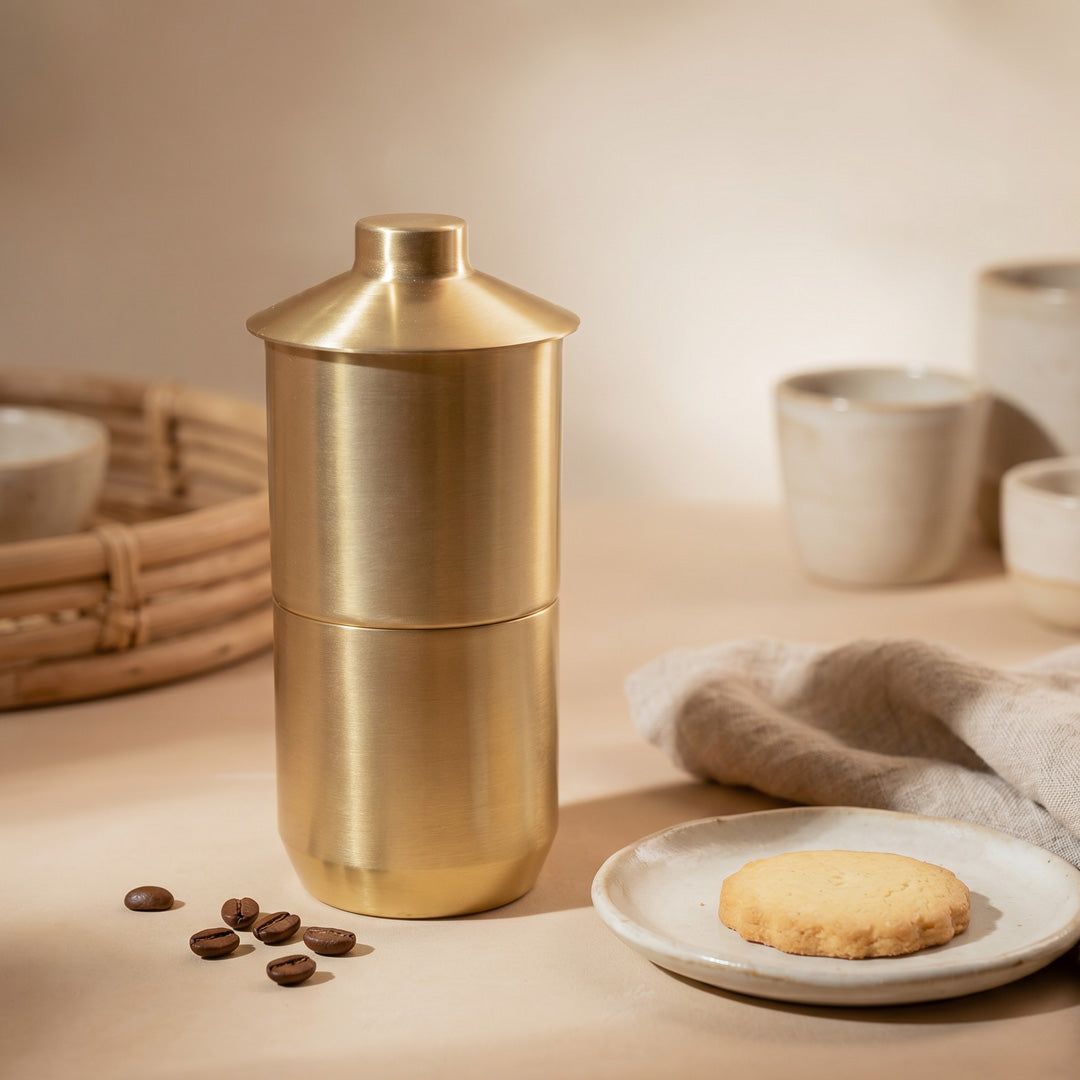
The brass dabara — tumbler and saucer for South Indian filter coffee — is the most-used piece in any Tamil home. Two of them, paired with a brass coffee filter, says: I want the first cup of your new house to be made with the same care your mother made it for you.
Around ₹3,000 for a set. Two dabaras, one filter, optional saucer.
2. A lamp (diya or vilakku)
Light, traditionally, is the first thing brought into a new home. A small brass oil lamp — a traditional Kuthuvilakku from Kerala or a simple Tamil Nadu deepa — is the ritual lighting on the first day. After that, it sits on the prayer altar.
If you're buying one, get the tall (8–10 inch) version. They look better when lit and are easier to refill.
Around ₹1,500–4,000 depending on craftsmanship.
3. A water vessel — copper or brass sombu
Storing drinking water in copper is an Ayurvedic tradition. Even if the new family doesn't observe it daily, a copper sombu sits in the kitchen, in the prayer corner, or by the dining table as a quiet daily ritual. Filled with water and a tulsi leaf on auspicious days.
Around ₹1,500 for a 1.5L sombu.
4. A serving bowl with spoon
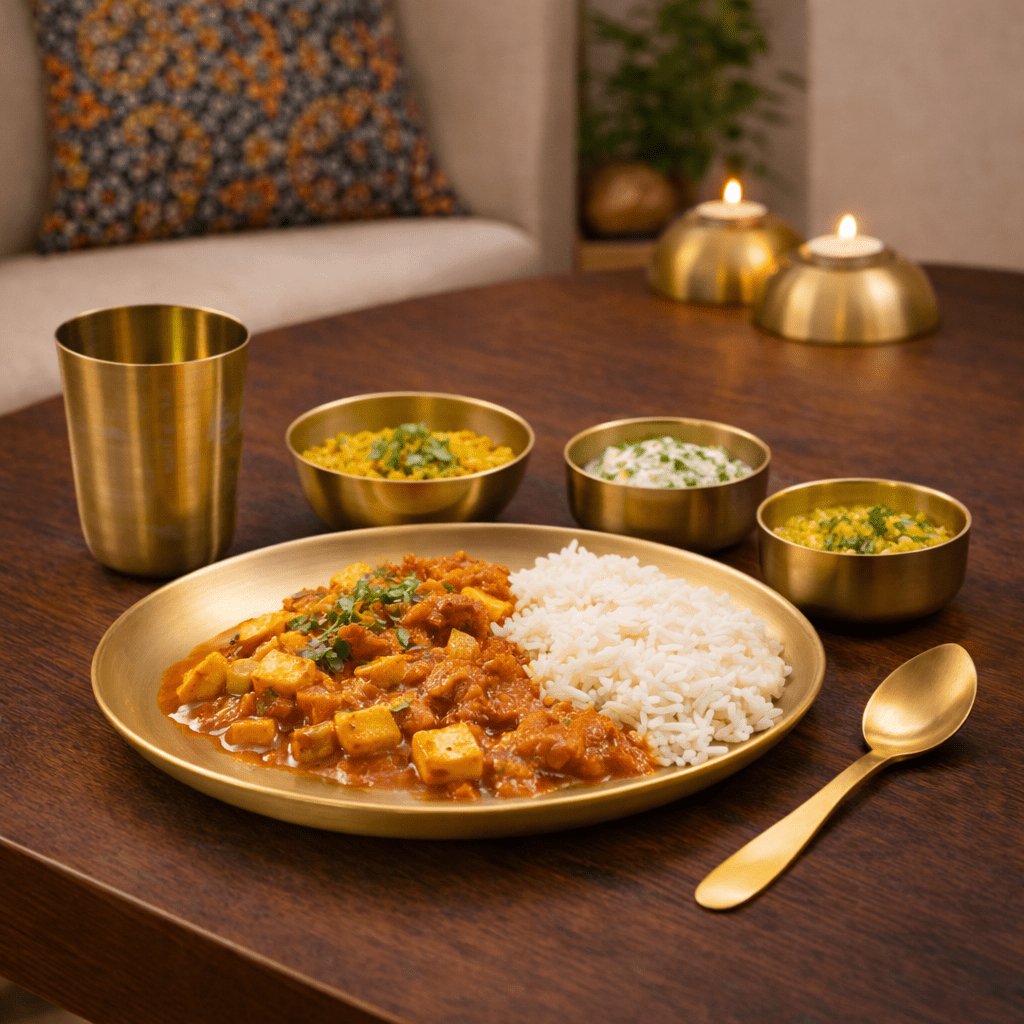
Functional and symbolic. The brass serving bowl appears on the dining table on the first meal hosted in the new home. It is the most "everyday" of the five items, which is the point — what you eat with often, you want to remember.
Around ₹1,100 for a hammered brass bowl with matching spoon.
5. A ghee pot or storage vessel
Brass storage was the standard before plastic. A ghee pot specifically (with a kalai lining) is the one most families still keep, because ghee in brass tastes different. The pot becomes a generational object — you pass it down with the recipe.
Around ₹1,200–2,000 for a small ghee pot.
Whole set together: around ₹10,000–12,000 if you buy individually. We do a curated Housewarming Set with five of these for ₹7,499, partly because we think the bundle should be priced honestly (not marked up for the gift wrap).
A few rules about giving brass
Don't give silverware. Indian housewarming traditions specifically prefer brass, copper, or kansa over silver — silver is for personal milestones (weddings, baby naming), not for the home itself.
Don't give knives or sharp objects. This is the one universal rule. Sharp objects "cut" the relationship between giver and receiver.
Write a card. Brass is heavy and the giver risks the recipient seeing the gift and feeling overwhelmed. A short line about why you chose these specific pieces (the dabara for the morning coffee, the lamp for the prayer corner) lands well.
Pick pieces that need to be used, not displayed. The brass coffee filter that sits in the kitchen is a better gift than the showpiece that sits on a shelf. Use is the highest form of respect a metal piece can receive.
These five are what I'd give. Adjust to taste.