
Article: The kansa question: why South India eats from bronze

The kansa question: why South India eats from bronze
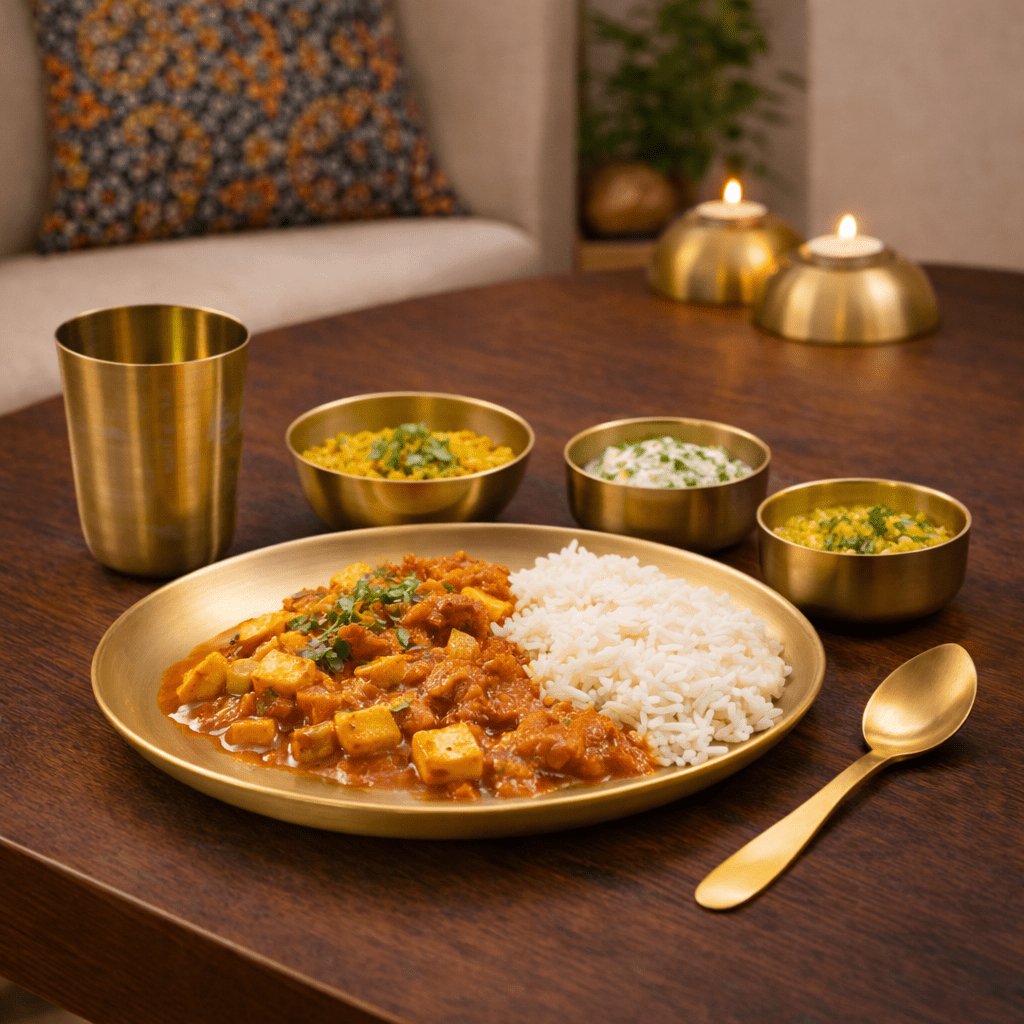
The first time I ate from a kansa thali was in Madurai, in 2018, at a small mess off the old market. The plate was matte gold, heavy, and slightly cool to the touch. I remember thinking the rice tasted different.
I assumed I was imagining it.
Kansa (or "bell metal", or "bronze" in English) is an alloy of about 78% copper and 22% tin. The exact ratio matters — 8 parts copper to 3 parts tin is the classical formula referenced in Susruta Samhita, an Ayurvedic text from roughly 600 BCE. Indian metallurgists have been making this alloy for over 2,500 years.
In South India, kansa was the dining metal of choice. Tamil Nadu, parts of Kerala, parts of Karnataka, parts of Odisha. Not for cooking — kansa is too rigid for that — but for serving and eating. Plates, bowls, tumblers, spoons. Always kansa.
Why?
The Ayurvedic claim is that kansa balances the three doshas — vata, pitta, and kapha. Food served on kansa is supposed to absorb a trace amount of the metal, which acts as a kind of mild digestive aid. Modern science is less metaphysical: copper has documented antimicrobial properties (which is why hospitals are now installing copper doorknobs), and tin is biologically inert. The combination provides a food-contact surface that resists bacterial growth without leaching anything harmful into the food.
But the reason kansa is on the South Indian table isn't science — it's taste.
Food cooked in onion and tamarind, served on kansa, tastes different from the same food on steel or porcelain. Slightly cooler. Slightly softer. The metallic note that you sometimes get from steel or aluminium is completely absent. It's a quiet difference. You won't notice it on the first meal. By the fifth meal, you'll wonder why everything else feels harsher.
The thing I love most about kansa is the patina. Like brass, kansa develops a darker, more golden surface over time. Your great-grandmother's kansa plate, if you have it, looks completely different from a new one — softer, warmer, slightly mottled. This isn't damage. It's the metal recording everything you've eaten off it.
A few practical things about owning kansa
It is more expensive than brass. A good kansa thali runs ₹2,500–₹4,000. There's a reason — the tin content makes the alloy harder to work, and most karigars charge a premium for kansa over brass.
It dents more easily. Bronze is harder than copper but more brittle than steel. Don't bang it against the counter. Don't stack heavy things on it.
It cannot go on a flame. Kansa is for serving, not cooking. If you want to heat something on the table, do it in brass and then transfer to kansa.
Wash it gently. Soft cloth, mild soap, dry immediately. Avoid abrasive scrubbers. The patina you see is the soul of the piece — you don't want to scrub it off.
Where to get one
We make ours through a family of karigars in Tanjore who have been doing this for three generations. There are other good sources — the Tamil Nadu state handicrafts board still sells real kansa, and a few traditional shops in T. Nagar and Madurai still stock it. Avoid anything that looks too shiny — chrome plating sometimes masquerades as kansa online.
If you've never eaten from kansa, try it once. Order a thali set, eat one Sunday lunch from it, see how it lands.
The Tamil and Telugu words for kansa are "vengala patram" and "kanchu paatra" respectively. The Sanskrit is "kamsya". The Hindi is "phul" or sometimes just "kansa". The word has survived in every Indian language that ever touched South Asia, which tells you something. The metal has been in our kitchens longer than most of our names.
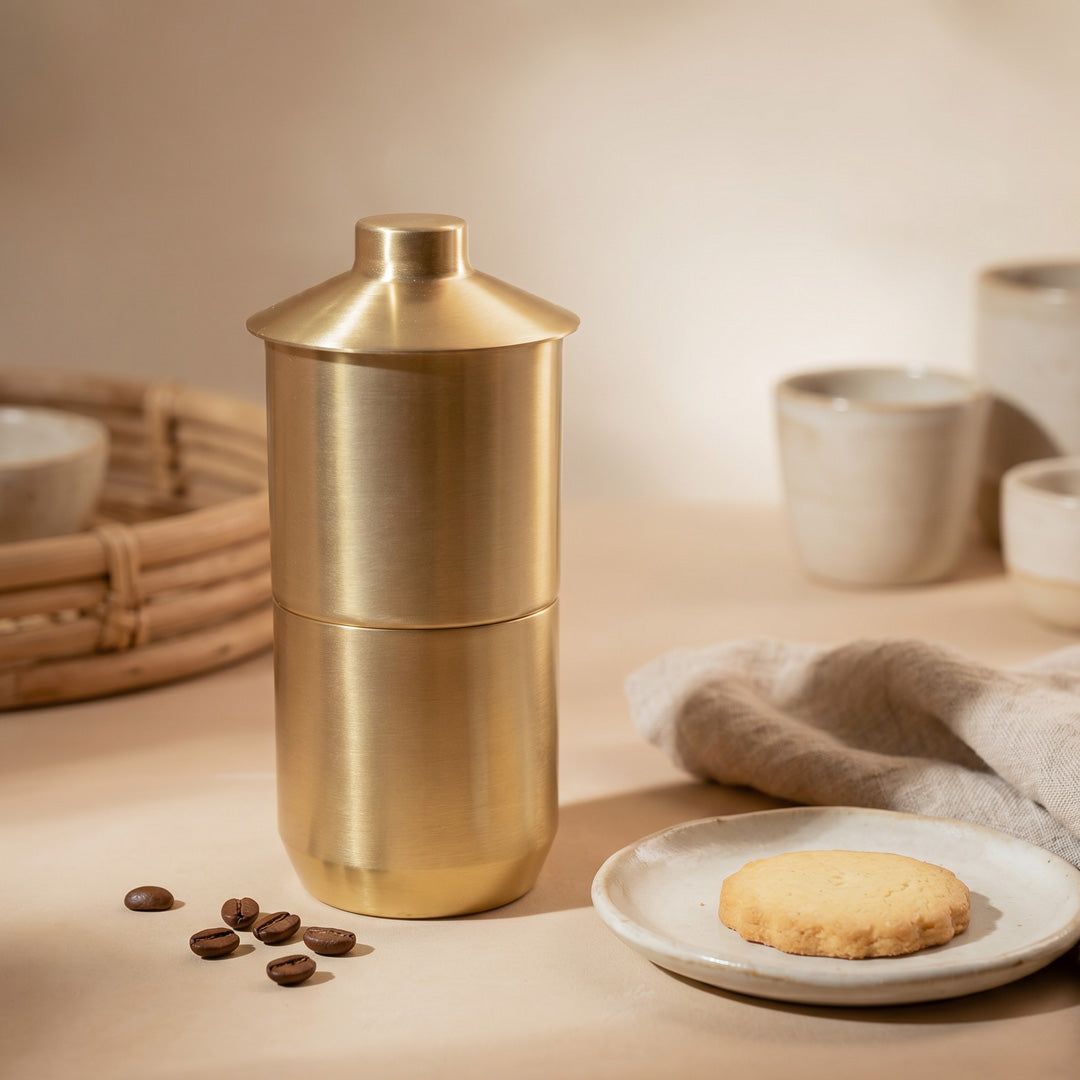
We don't sell kansa cookware for a reason — it's a dining metal. But we sell thalis, bowls, dabaras, and glasses. If you've never owned a piece, start with the dabara. Drink your morning coffee out of one for a month. You'll know what I mean.