Tamra Jal: What Ayurveda Has Known for 5,000 Years
Tamra jal—copper water—is not a wellness trend. It is a prescription written 5,000 years ago that modern microbiology is finally catching up to explain.
In Ayurvedic medicine, storing water overnight in a copper vessel is not optional. It is foundational. The ancient texts describe copper as purifying, strengthening digestion, balancing pitta and kapha, and promoting overall vitality. For millennia, this was accepted on tradition. Today, peer-reviewed research has revealed exactly what is happening at the molecular level.
What is tamra jal?
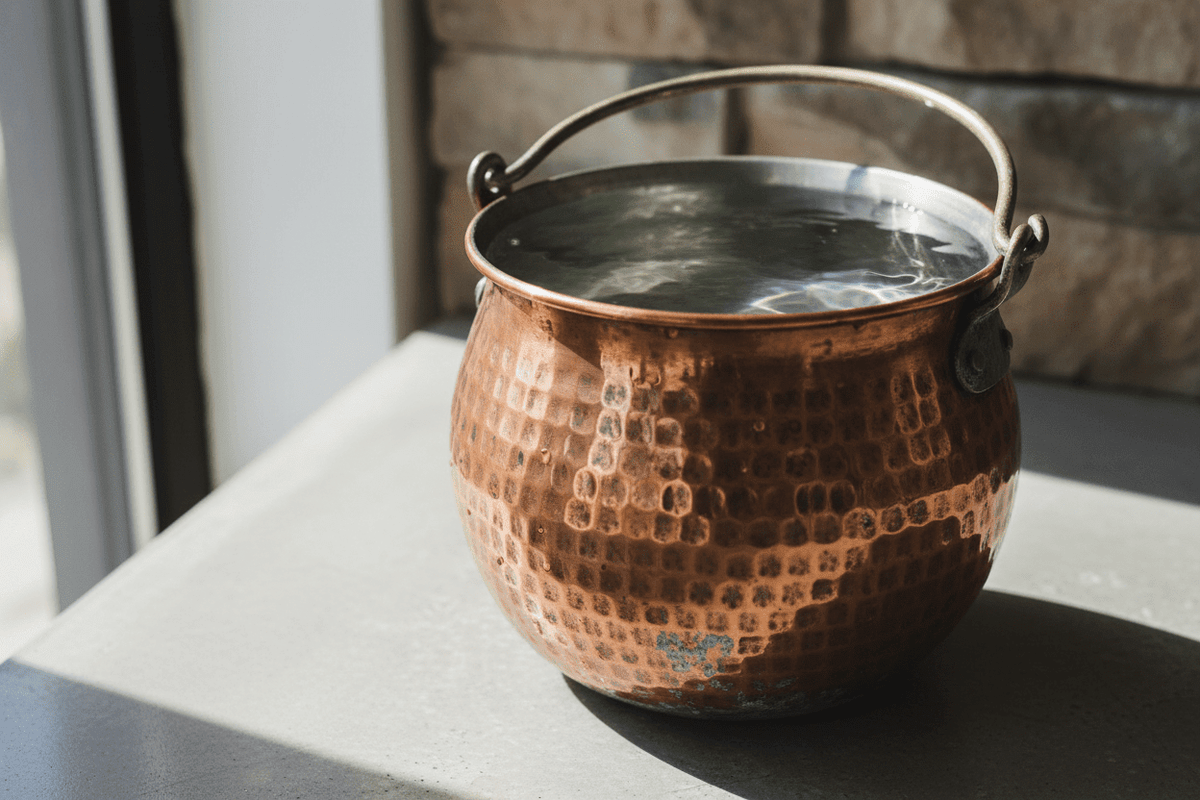
Tamra jal simply means copper water: water that has been stored in a pure copper vessel for a minimum of 6 to 8 hours, ideally overnight. As the water sits, microscopic amounts of copper ions leach into the liquid. These ions are not visible—you cannot taste them—but they are actively working.
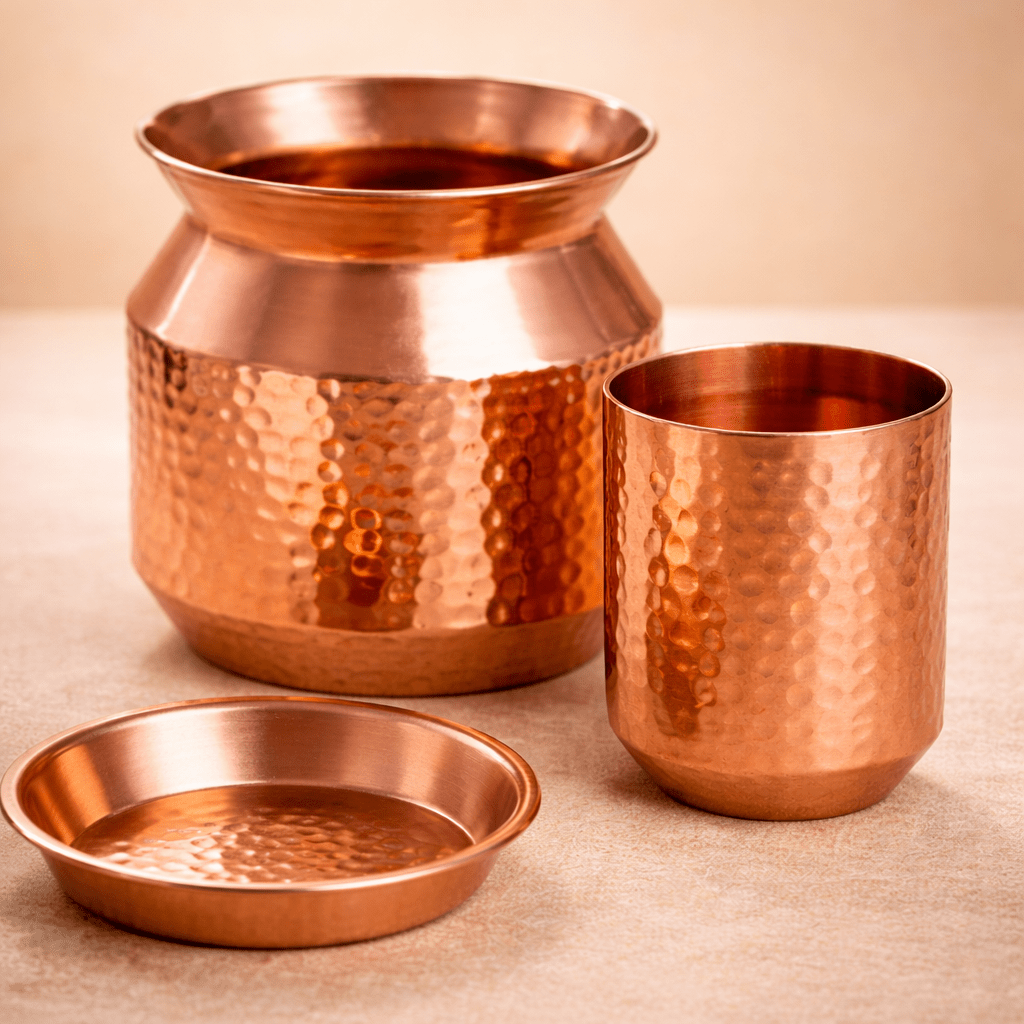
This is not the same as copper-plated or copper-coated vessels. A plated vessel is a thin layer of copper over another metal. It will scratch. It will flake. When you use a House of Dhatu pure copper vessel, the copper itself is the material—solid, consistent, uncompromised.
The science: oligodynamic action
The mechanism is called the oligodynamic effect. This is the ability of certain metals—copper, silver, gold—to kill or inhibit microorganisms even in extremely low concentrations.
When copper ions come into contact with bacterial cell membranes, they destabilize the membrane's structural integrity. They interfere with protein synthesis. They disrupt the cell's ability to respire. The result is that bacteria, viruses, and algae simply cannot survive. This happens within minutes to hours, depending on the organism and the copper concentration.
The World Health Organization acknowledges copper's antimicrobial properties. In fact, hospitals have begun installing copper-alloy fixtures—door handles, bed rails, light switches—because pathogens are slower to colonize copper than stainless steel. If copper works in clinical settings to reduce infection spread, it will work in your water vessel.
A 2012 study published in the Journal of Health, Population and Nutrition tested water stored in copper vessels over 48 hours. The researchers found significant reductions in E. coli, V. cholerae, and S. typhi—pathogens responsible for serious waterborne illness. A 2015 study in the same journal confirmed that copper vessels reduced harmful bacteria in water by up to 99% within the first 16 hours.
This is not magic. This is metallurgy.
How much copper is safe?
The WHO recommends that copper levels in drinking water not exceed 2 mg per litre. This is not because copper is inherently toxic—it is an essential micronutrient that your body needs. It is required for iron absorption, bone strength, and the function of your nervous system.
Water stored in a copper vessel for 6 to 8 hours contains approximately 0.01 to 0.05 mg of copper per litre—well within safe limits. You would need to drink water from an extremely high-purity copper vessel left overnight for days, or store it in a damaged or heavily corroded vessel, to approach concerning levels.
The recommendation is simple: drink 1 to 2 glasses of copper water per day. This provides the antimicrobial benefits and the copper supplementation your body naturally needs, without excess.
How to use copper water correctly
The method matters.
Storage time: Water needs a minimum of 6 to 8 hours to reach meaningful copper concentration. Overnight is ideal. If you fill your vessel in the evening, the water will be ready to drink first thing in the morning.
Temperature: Copper ions leach more readily into room-temperature water than cold water. If you keep your vessel in a cool place, the process takes slightly longer. If you leave it at room temperature, the transfer accelerates.
What not to mix: Do not store lemon, lime, or other acidic substances in your copper vessel overnight. Acidic water increases the rate of copper leaching substantially and can push levels above safe limits. Copper water works best on its own, or you can add a squeeze of lemon after drinking if you prefer the taste.
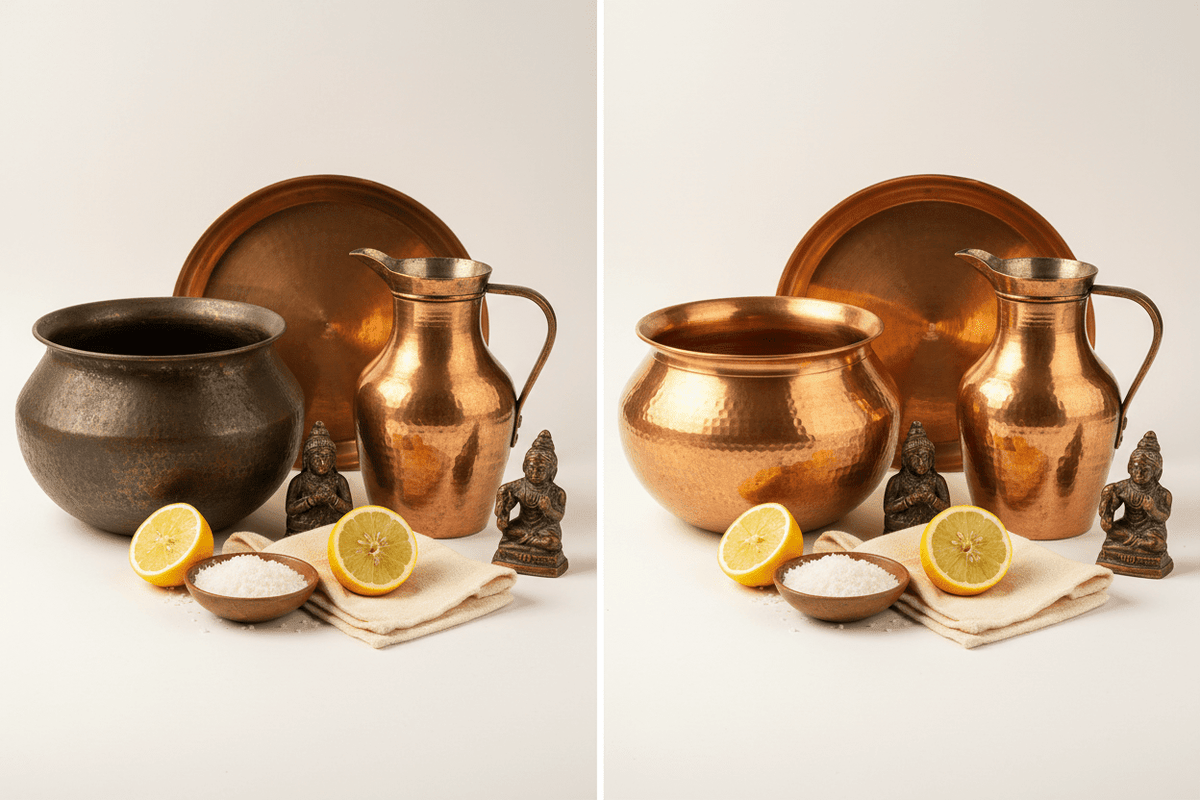
The vessel itself: This is where purity matters. A solid copper vessel—no coating, no plating, no alloy dilution—will produce consistent, safe results. A plated vessel will scratch and expose base metals beneath, compromising both safety and effectiveness.
A morning ritual
The most common practice: fill your copper vessel with filtered or boiled water in the evening, leave it on your nightstand or kitchen counter overnight, and drink a glass first thing in the morning on an empty stomach. Ayurveda suggests this routine supports digestion, strengthens your digestive fire, and prepares your system for the day.
Modern research has not yet studied whether the timing matters for absorption or whether digestive benefits are real. What is certain is that the water is cleaner, more safely preserved, and you are receiving a gentle dose of an essential mineral your body needs.
Whether you approach this as Ayurvedic medicine or as practical metallurgy, the outcome is the same: water that is safer, and a tradition that is proven.
A solid copper vessel lasts a lifetime. The habit lasts longer.