Why filter coffee tastes different in brass
The first time I noticed it, I thought I was imagining things. The same coffee powder, the same water, the same proportions — but the decoction from my paati's old brass dabara tasted different from the one I had been brewing in my stainless steel filter for years.
It was rounder. Less sharp. The bitterness held back a beat longer. The aroma sat on the table like a presence, not a memory.
For weeks I tried to convince myself it was nostalgia. Then I started reading.
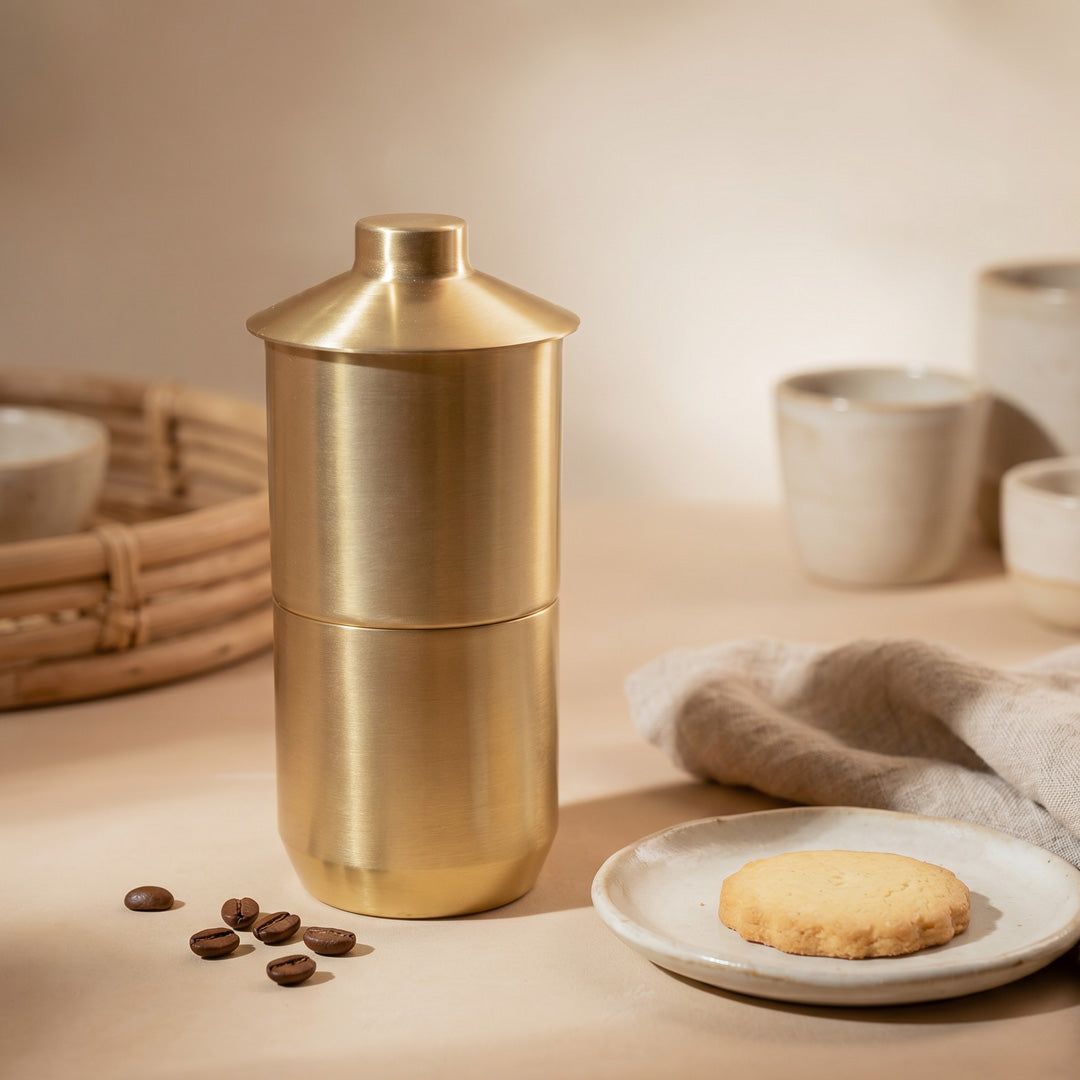
Brass — an alloy of copper and zinc — is a porous metal at the microscopic level. When hot water passes through coffee grounds in a brass filter, trace amounts of copper interact with the coffee compounds in ways that mute astringency and round out body. South Indian families have made decoction in brass for centuries not because of any scientific paper but because they tasted the difference.
Steel doesn't do this. Aluminum certainly doesn't. A 2017 study from a coffee research lab in Karnataka tested decoction extracted in brass against stainless steel and found measurable differences in chlorogenic acid breakdown — the same family of compounds that controls bitterness.
But you don't need a paper. Make filter kaapi in a brass dabara for a week. Then make it in steel. Tell me what you taste.
A few practical notes if you're new to brass filters
Season it first. Run plain hot water through twice before the first batch. This removes any residual factory polish and seasons the metal.
Don't use detergent. Lemon and salt for cleaning. Detergents leave a film that affects the next brew.
A new brass filter "smells like metal" for the first 5–6 batches. This goes away. Don't panic.
Decoction takes longer in brass — usually 15–20 minutes versus 10 in steel. This is the point. The slow drip is part of why it tastes better.
We sell brass filters because we love them. Our karigar in Madurai has been making them for 30 years. He says the difference is not in the metal — it is in the time. A brass filter makes you wait. And what you get for waiting, you cannot rush in steel.
Pour the decoction over hot milk. Two parts decoction, one part milk. Add jaggery or sugar. Drink it slowly.
That is filter kaapi.