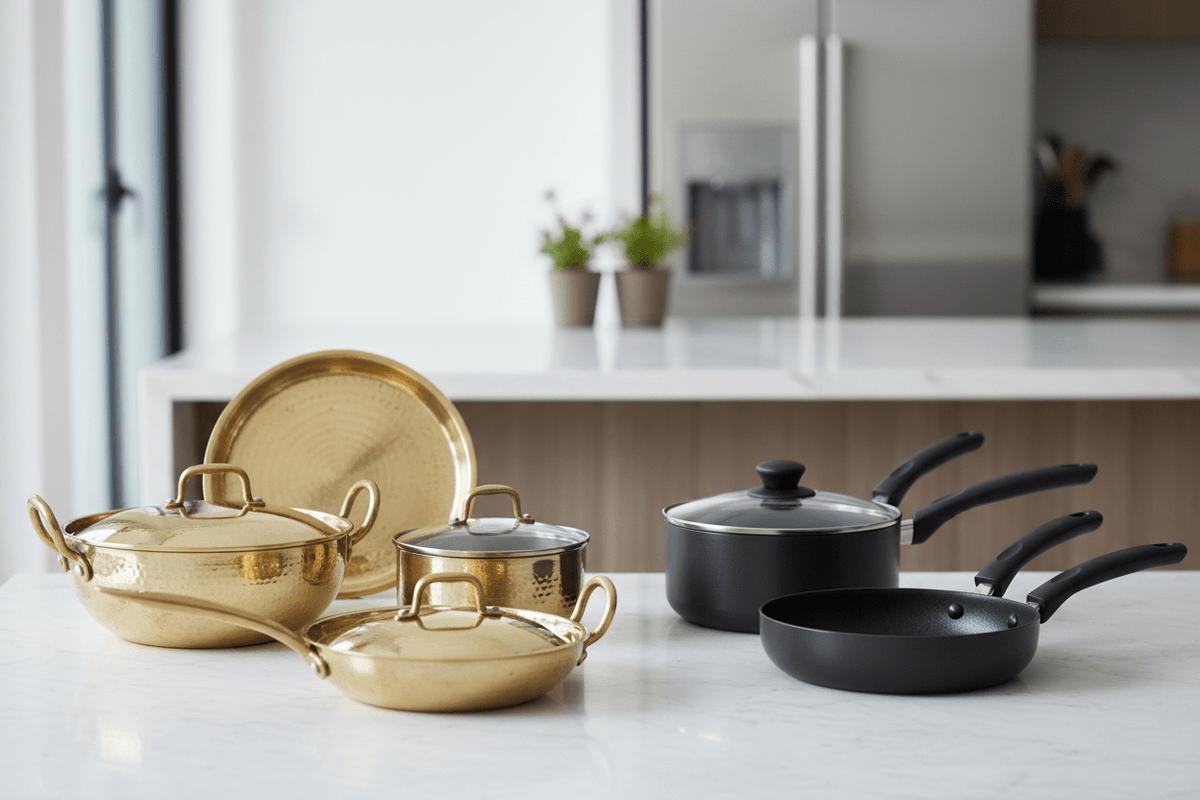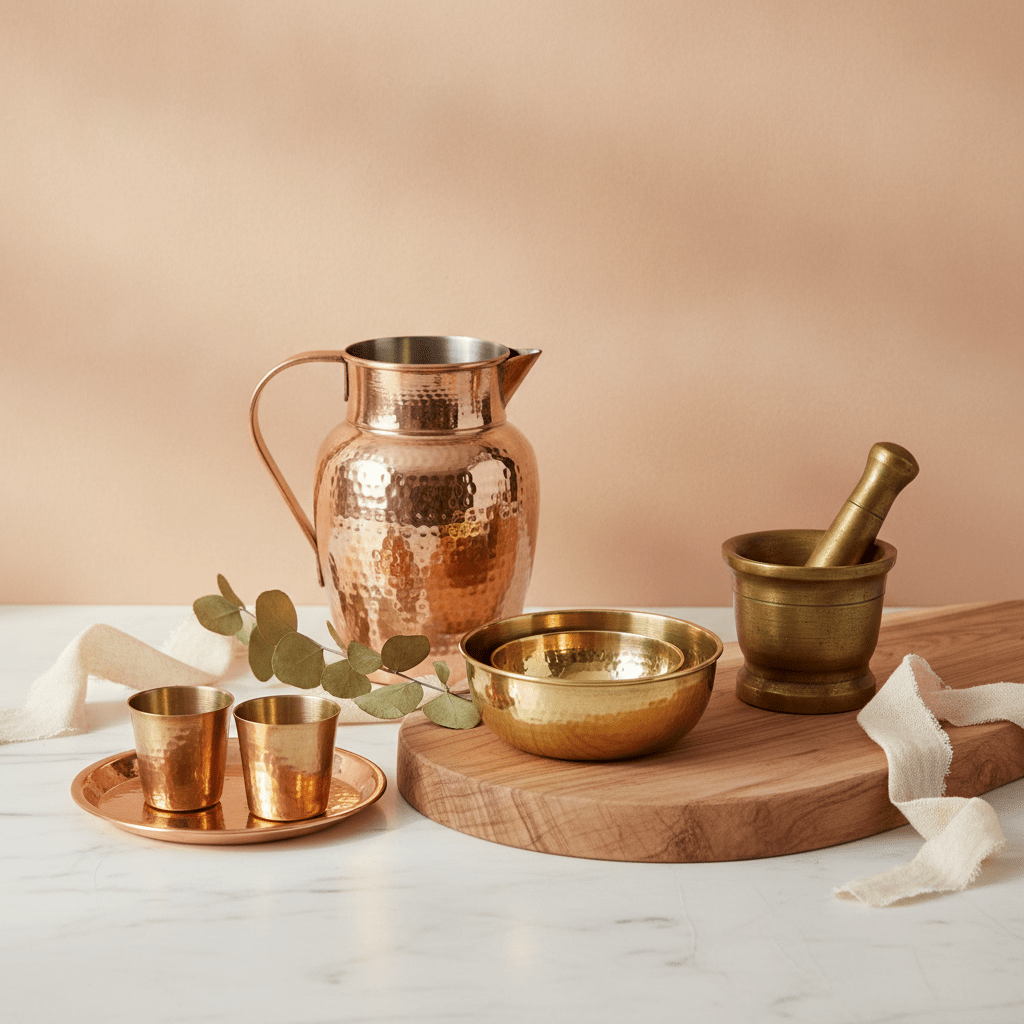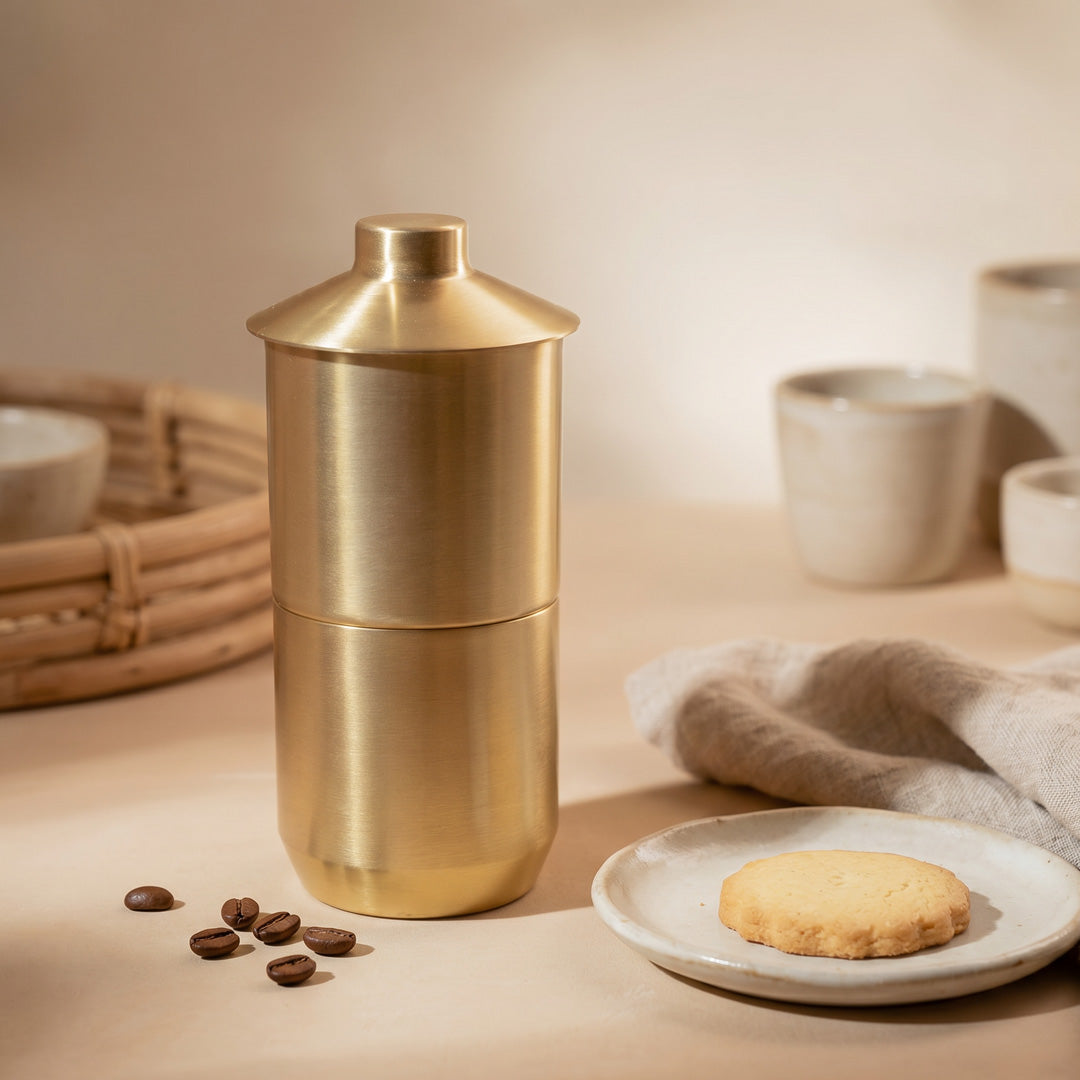
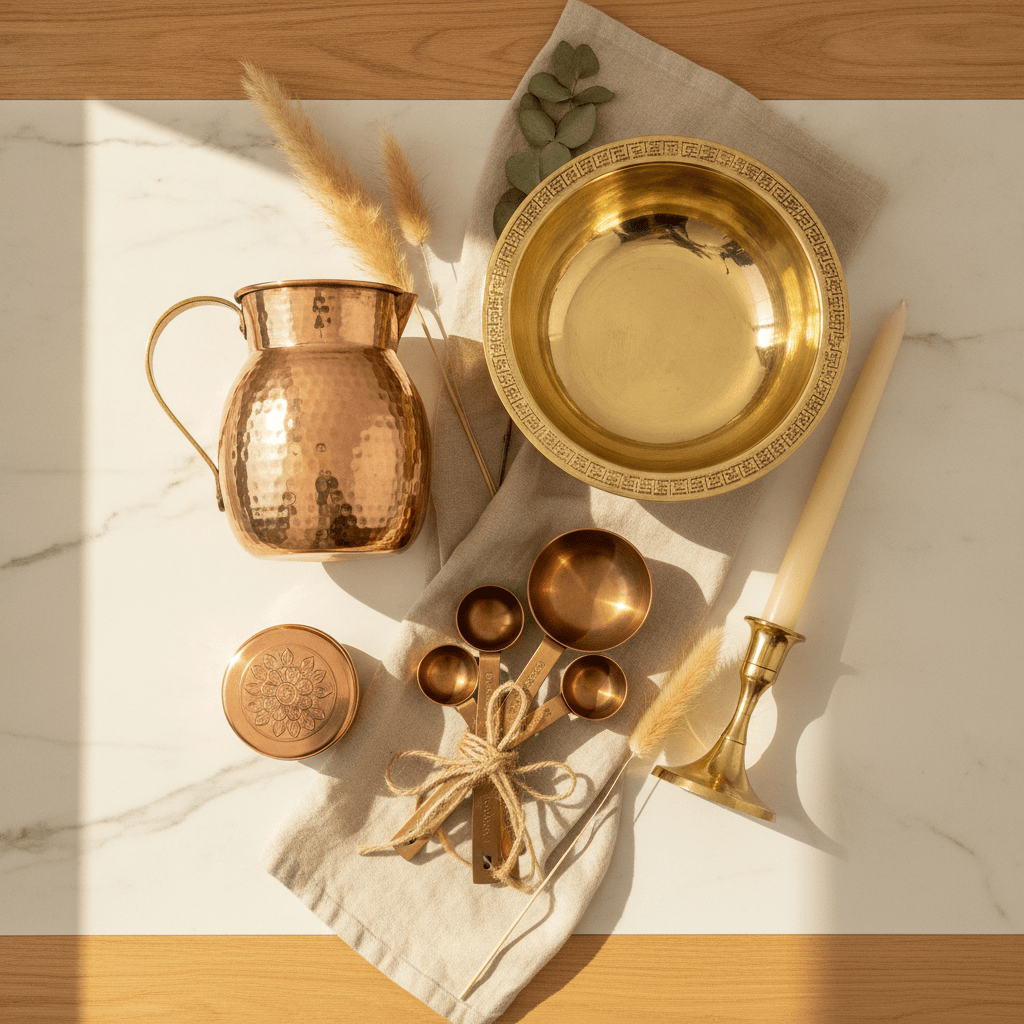
The best housewarming gift sets in copper, brass and bronze are curated combinations of handcrafted metal utensils, chosen by use case, that blend daily functionality with cultural meaning. A brass pooja thali set, a copper water set, or a kansa tumbler paired with a serving bowl, these are gifts that tend to earn a lasting place in a home, not a shelf corner.
If you have spent twenty minutes in a gifting aisle trying to decide between a generic candle set and something that actually means something, you already know the problem. The best housewarming gifts are not just beautiful. They are useful, rooted in something real, and built to last. That is exactly what traditional Indian metalware does, when it is made properly.
Why Copper, Brass and Bronze? A Quick Rationale Before You Choose
These three metals are not interchangeable, and treating them that way is one of the most common gifting mistakes. Each has a distinct character, a distinct place in Indian households, and a distinct reason someone would actually use it every day.
- Copper has been used in Ayurvedic water storage for centuries. Water stored in a copper vessel overnight is called tamra jal and is a widely practiced morning ritual across Indian homes. Copper utensils are recognisable, meaningful, and accessible across most budgets.
- Brass sits at the intersection of the sacred and the everyday. It is the metal of pooja rooms, festive dining, and heirloom utensils. Brass carries cultural weight without being difficult to maintain.
- Bronze (Kansa) is the most underrated of the three. It is the metal of traditional South and East Indian dining, commonly associated with Ayurvedic digestion practices and long-revered in temple kitchenware. A kansa thali or tumbler is a genuinely considered, premium gift that few people think to give.
At House of Dhatu, all three metals are NABL-certified pure, with no coatings or plating. That matters because plated metal looks similar but behaves very differently over time. What you give is what stays.
The Best Brass Housewarming Gift Sets, Curated by Use Case
Best for the Pooja Room
Who this suits: Families moving into a new home who observe daily or weekly puja rituals, or anyone from a traditionally observant household.
Brass is the pooja room metal of choice across most of India. A well-chosen brass gift set for this space might include a diya or oil lamp set, a kalash (water vessel used in ritual contexts), and a pooja thali. These are items that will be used at the gruhapravesam ceremony itself and every day after that. They are not decorative gestures. They are functional, sacred, and deeply personal.
The brass urli, a wide, shallow decorative bowl traditionally used for floating flowers and diyas, also works beautifully here. It bridges the pooja room and the home entrance, and it is one of those pieces that photographs well enough that every guest notices it.
Best for the Kitchen and Dining Table
Who this suits: Urban households who cook daily and want their table to feel considered, not just functional.
A brass masala box (spice box) is one of the most genuinely used kitchen gifts you can give. Almost every Indian kitchen has one, and almost every Indian kitchen deserves a better one. Pair it with a brass serving spoon or a small brass serving bowl for a set that anchors the kitchen with quiet elegance.
For festive dining, a brass thali set with small katoris (bowls) makes a housewarming gift that gets pulled out for every occasion. It signals that the giver thought about how the recipient actually lives, not just how the gift looks in a box.
Best for a Decor-Forward Home
Who this suits: Design-conscious urban households who appreciate craftsmanship and want their everyday objects to be beautiful.
A handcrafted brass urli in a larger size, or a set of brass tumblers arranged on a tray, works as both functional tableware and a visual anchor in a living or dining space. The warmth of brass ages well and develops a natural patina that many people come to love.
The Best Bronze Housewarming Gift Sets: The Underrated Choice
Who this suits: Recipients who follow Ayurvedic practices, have South or East Indian culinary traditions, or simply appreciate something genuinely uncommon.
Kansa, the traditional Sanskrit name for bronze, has a long history in Indian dining culture. In South India, serving food on kansa plates is considered auspicious. In Ayurvedic texts, eating from kansa is commonly associated with supporting digestion. Whether or not someone follows Ayurveda closely, gifting kansa is a way of saying: this is not something you will find at every gifting store.
A kansa tumbler paired with a kansa plate or bowl makes a strong, cohesive gift set. The metal has a distinctive silver-gold tone, slightly cooler in appearance than brass, and it feels substantial in a way that is immediately noticeable. For a housewarming, where the gift is meant to signal the beginning of good things, bronze carries exactly that kind of cultural weight.
Recommended for you
-
 The Housewarming Set – Brass Coffee Maker, Dabara, Mug, Bowls & Coasters
A complete brass set — coffee maker, dabara, mug, bowls and coasters — built for gifting.
-
 Kansa Dinner Set | Traditional Bronze Dining Set
Full bronze dining set in traditional kansa, rooted in Ayurvedic and everyday ritual use.
-
 Copper Sombu (Pot) with Lid & Tumbler | Traditional Water Storage Set
Copper sombu with lid and tumbler — a classic water storage set for a new home.
At House of Dhatu, kansa pieces are part of curated ritual sets, not standalone novelties. That framing matters because it gives the recipient a reason and a way to use the gift from day one.
How to Build a Meaningful Gift Set: Pairing Logic Across Metals and Occasions
Gruhapravesam (Traditional Housewarming Ceremony)
A gruhapravesam is a Vedic housewarming ritual performed before a family moves into a new home. It involves fire, water, and sacred vessels. Gifting for this occasion calls for items that participate in the ritual, specifically brass or copper pieces like a kalash, a diya set, or a pooja thali. Kansa can be included as a dining gift to welcome the family into their first meal in the new home.
The pairing logic here is: one piece for the ritual, one piece for the table. That combination is complete without being excessive.
General Urban Housewarming
For a contemporary housewarming party in a city apartment, the ritual framing is lighter but the functionality matters more. A copper water set (jug and tumblers) or a brass chai corner set (think: kadai, tumblers, and a small tray) frames the gift as a daily ritual, not a one-time display piece. House of Dhatu's curated sets like The Chai Corner or The Morning Table do exactly this, they give context to the objects so the recipient knows how to use them and why.
Corporate Gifting
For corporate gifting at scale, individual pieces work better than elaborate sets. A single kansa tumbler or a copper water bottle in a gift-boxed presentation is meaningful, premium-feeling, and appropriate across most demographics. Brass coasters or small brass bowls work similarly. The key is that pure metal, handcrafted and NABL-certified, already carries the premium signal without needing to be oversized.
House of Dhatu offers same-day delivery in Bengaluru with gift-boxed presentation, which makes last-minute corporate or personal gifting genuinely workable, not stressful.
Care, Safety, and Longevity: What Every Recipient Needs to Know
This is the section that most gifting guides skip, and it is where a lot of gifting hesitation lives. So here is the direct version:
Are copper and brass utensils safe for food and water?
Uncoated, pure copper and brass utensils are widely used across Indian households for both storage and serving. Copper vessels for water storage are generally considered safe when used as intended: filled with water and consumed within 6 to 8 hours. Acidic foods (lemon, tamarind, curd) should not be stored in copper or unlined brass for extended periods. This is standard practice, not a safety concern unique to metal utensils.
Brass utensils used for cooking or serving dry foods, grains, and non-acidic items are commonly used without issue. Many traditional brass vessels used for cooking are tin-lined (a process called kalai), which creates a neutral food-safe surface for acidic cooking.
Cleaning and maintenance
All three metals, copper, brass, and bronze, are cleaned simply with a paste of tamarind, salt, and a little water. This is a method used in Indian kitchens for generations. No harsh chemicals, no special equipment. The metals develop a natural patina over time that many households consider part of the character of the piece.
Kansa (bronze) requires the least maintenance of the three. It does not tarnish as readily and holds its appearance with minimal care.
What about longevity?
Pure metal utensils, when maintained properly, may last for decades. House of Dhatu's lifetime buyback program reflects this directly: each piece is positioned as a lasting-value purchase, not a disposable gift. For a housewarming gift especially, that is a meaningful distinction. You are giving something designed to endure well beyond the first few years.
Gift Set Budget Guide: What to Expect Across Price Tiers
- Under ₹500: A single copper tumbler or a small brass diya. Clean, useful, but limited in set-building scope. Works as an add-on to a larger gift, not as a standalone housewarming gesture.
- ₹500 to ₹1,500: A copper water set (jug and one or two tumblers), a brass masala box, or a small brass pooja thali. This is the most practical gifting range for individual items and small sets. The recipient gets something they will likely use daily.
- ₹1,500 to ₹3,500: Curated two or three piece sets: a chai corner set, a kansa tumbler and plate combination, or a brass thali with katoris. This range covers the most thoughtful, ritual-based gifting that feels genuinely premium.
- ₹3,500 and above: Full ritual sets, larger kansa dining sets, or multi-piece brass festive dining collections. These are appropriate for close family, significant gruhapravesam ceremonies, or high-value corporate gifting. At this level, the craftsmanship, weight, and presentation do the talking.
Across all tiers, what changes is not just size but the depth of the set. A higher budget buys a more complete daily ritual, not just a more expensive object.